Delphiniums-updated for 2026

Shades of delphinium elatum
In early summer, delphiniums, a favorite of the perennial garden, are in full bloom. I’ve always loved them for their beautiful range of colours and their attractiveness to my beloved hummingbirds. Once the delphiniums open, I rarely see the hummers at my feeders, but I get to watch them flying and drinking among the flowers in the evenings. I would grow them for that reason alone, but they also add such great colour and shape to the garden. They love cool weather and tolerate light frosts, which makes them ideal for our short Alberta summers. I grow five different cultivars in many colors because they are such a great plant. Here’s a rundown of some of my favorites to grow.
The classic variety in many gardens is Delphinium cultorum. This includes the Pacific Giants series, which comes in a range of pretty colors with contrasting white or dark bees. The ‘bee’ is the small center flower of a delphinium bloom. They grow quite tall, reaching 5 or 6 feet with blooms, making them a bit of a problem anytime the wind picks up. There’s nothing more discouraging than having your flower-heavy stems toppled by a thunderstorm. If you can’t give them protection from the wind, staking the blooms is a good idea so you don’t lose them to the weather. In my garden, I have several colours of D.cultorum, my favorite being the Triton series light blue. It’s the perfect sky blue with a contrasting white bee, doesn’t get too tall, and is always the earliest delph to bloom in my garden. I started 50 plants from seed 4 years ago, and they've given me hundreds of stems since.
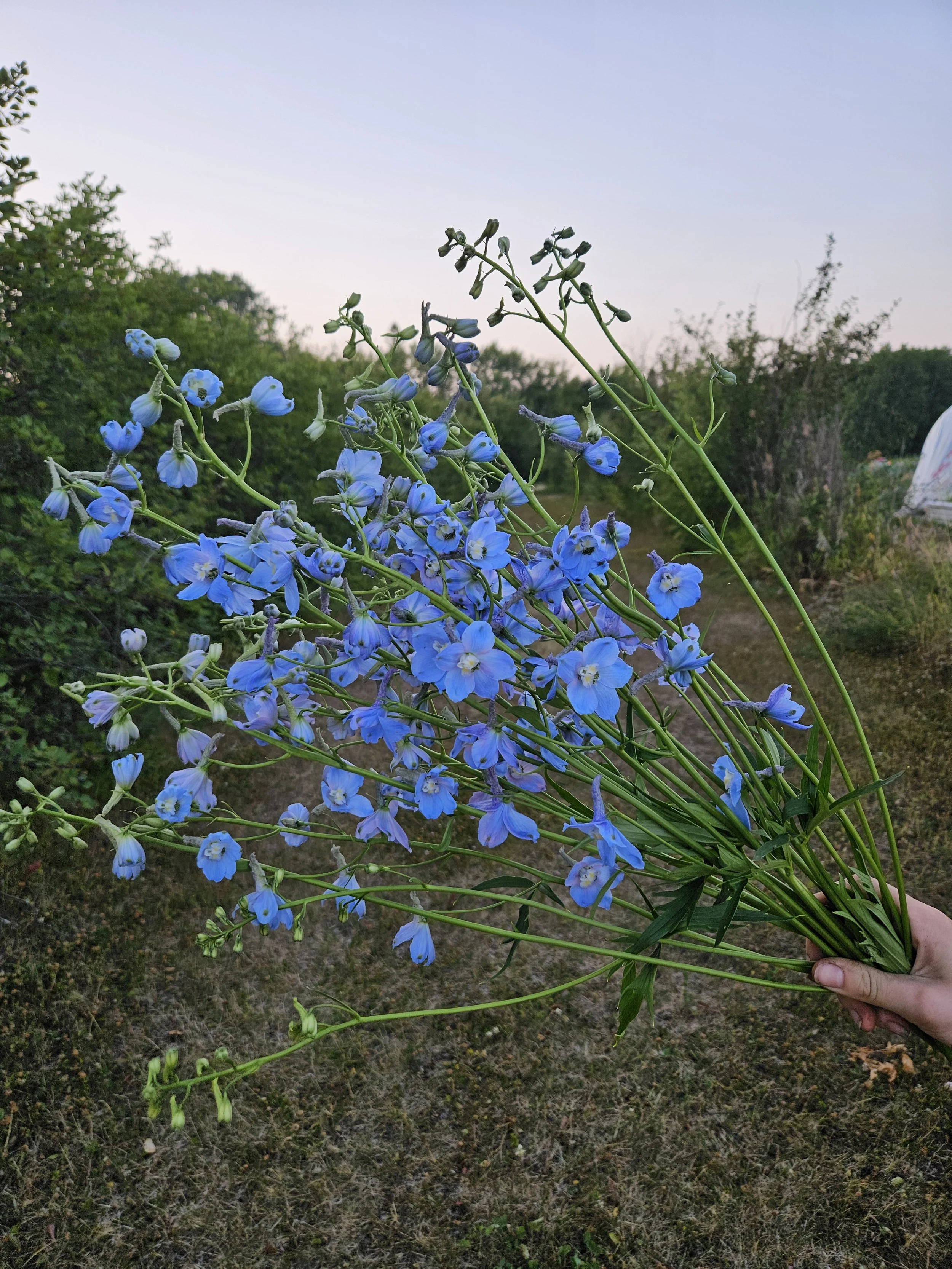
D.belladonna ‘Cliveden Beauty’
A much less common variety is Delphinium Belladonna. I love the flowers on this plant for their airy, dainty look. I use it in wedding work and for drying as it holds it’s colors better than any other delphinium I’ve tried. It’s shorter than D. cultorum as well, about 4 ft tall, but does still benefit from staking in the garden. I have the white ‘Casablanca’ and my favorite, ‘Cliveden Beauty’, a beautiful pastel blue. They are particularly prone to powdery mildew, so I start new plants every year and rip out the old ones to keep my rows healthy.
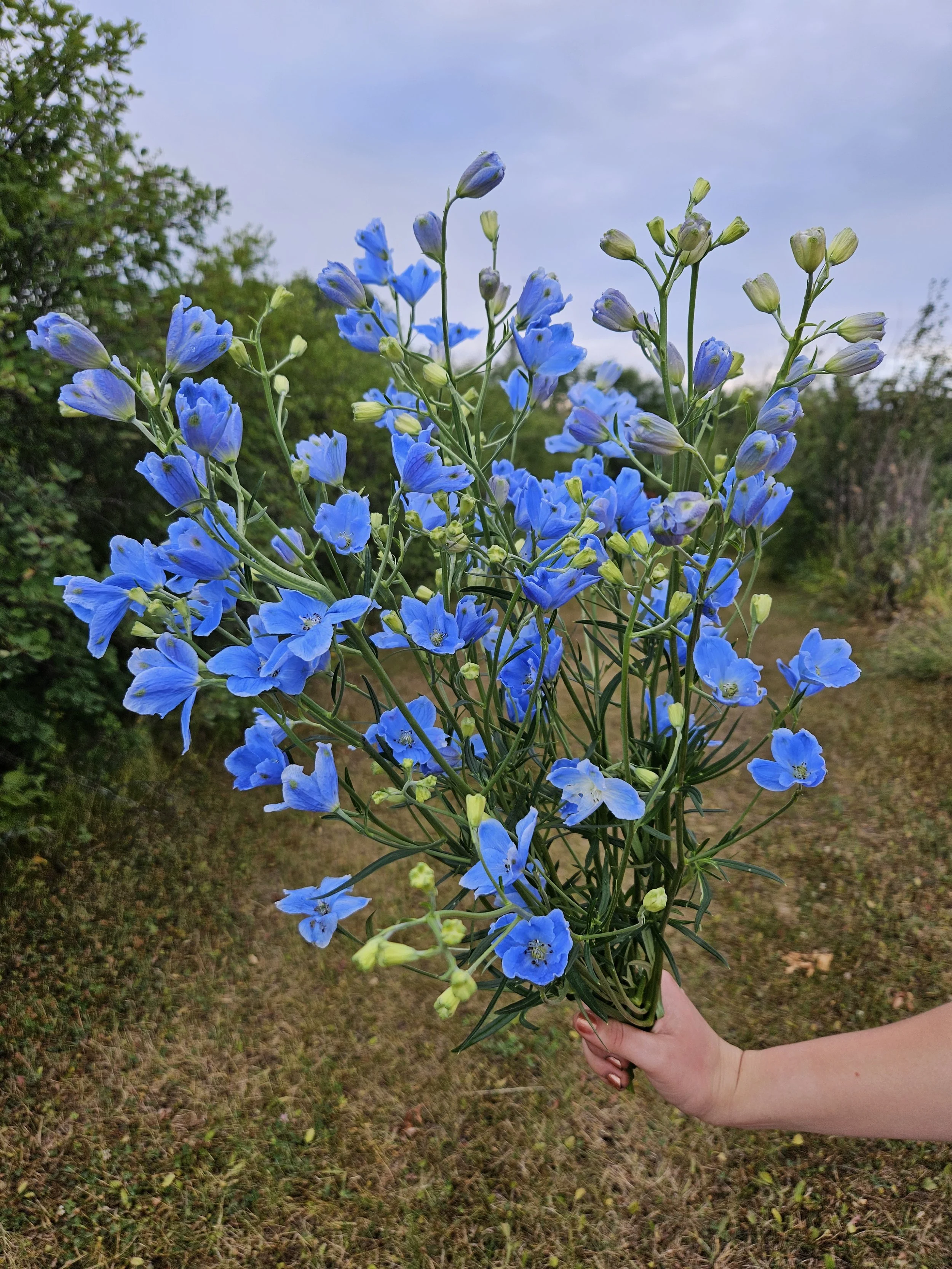
D. Grandiflorum Brezza light blue
One variety I am always trying to convert gardeners and growers to is Delphinium Chinensis, also known as Delphinium Grandiflorum I think this is a fabulous cut flower and so pretty in the garden! It’s a much smaller plant, 2 feet if given lots of space, 3 feet if grown with tight spacing. It has a branchy habit, making it a great filler flower. The bees and other pollinators love it too. It’s shorter height makes staking not necessary, another bonus. If you leave the flowers to go to seed in your garden, it will readily self sow, giving you more plants next year. I start it from seed indoors and it flowers the first year but gets better and taller in subsequent years. I have tried ‘Diamonds Blue’ (electric blue), ‘Fashion Lavender’ and ‘Butterfly Blue’, ‘Pink’ and ‘White’. Brezza Light Blue is a new d. Grandiflorum I trialed for the ASCFG in 2025. It’s now my favorite because of the large flowers and intense blue color. It produces loads of branchy stems, and the color dried beautifully for me this past fall.

And now, my all-time favorite cultivar, Delphinium Elatum. These are hybrid cultivars designed for the florist trade, with a range of unusual and beautiful colors. The plants flower in a pyramidal shape, with the flowers held away from the stalk by long stems. The individual florets are large, and I use them in boutonnieres, corsages, and flower crowns. I have a lot of d. elatum colors in my garden, too many to name individually, but Pink Blush and Pink Princess are two stunning ones that attract lots of attention. The Candle series is a new introduction, and I trialed Candle Lavender in 2025 for the ASCFG. I hope this one will be widely available soon. It’s a very pretty color, and has been bred to flower under short day conditions. This means that it will flower with as little as 10 hours of daylight and could be grown for winter production. Because it will flower early in the year, it will produce at least one more flower stem before frost, making it a better cut flower than most, which produce a single stem per year. The seeds for these special hybrids are not readily available in garden centres but can be ordered online from one of the breeders, New Zealand Delphiniums. I interviewed the owner, Katrina Hindmarsh, for The Sustainable Flowers Podcast. She is a wealth of information about best practices in growing and breeding delphiniums. Have a listen if you’re up for a deep dive on these gorgeous hybrids. We covered seed starting, pests and diseases, and growing conditions. Lots to learn.
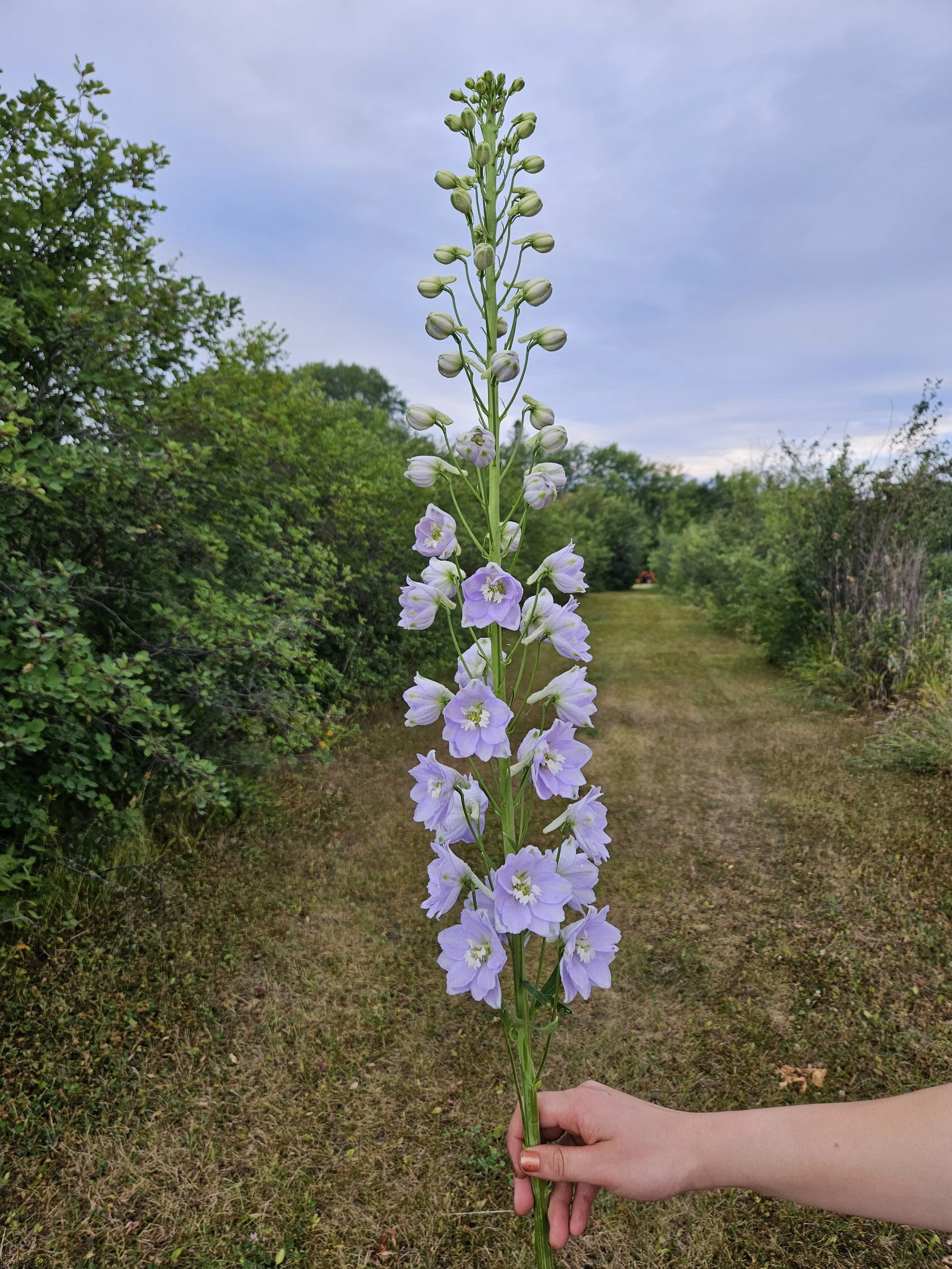
Candle Lavender
There are tissue culture delphiniums available as plants. The Highlander series is one of the tissue-culture delphiniums I’ve tried. These are much smaller than average, about 2 feet tall, and come in shades of lavender, greens, and whites. It’s pretty, and I use it mostly for dried bouquets as its small size makes it more useful in arranging. I’ve also bought Red Lark tissue culture delphinium. It was plagued with powdery mildew and died out after one year, so save your money for other, more hardy and affordable plants.
Whatever delphiniums you have in your garden, I hope you get to see the hummingbirds feeding off them this summer. It’s the best sight ever.